


Singaporebrides | Weddings 101
September 2026
A Guide to Choosing Engagement Rings and Wedding Bands You’ll Love for a Lifetime
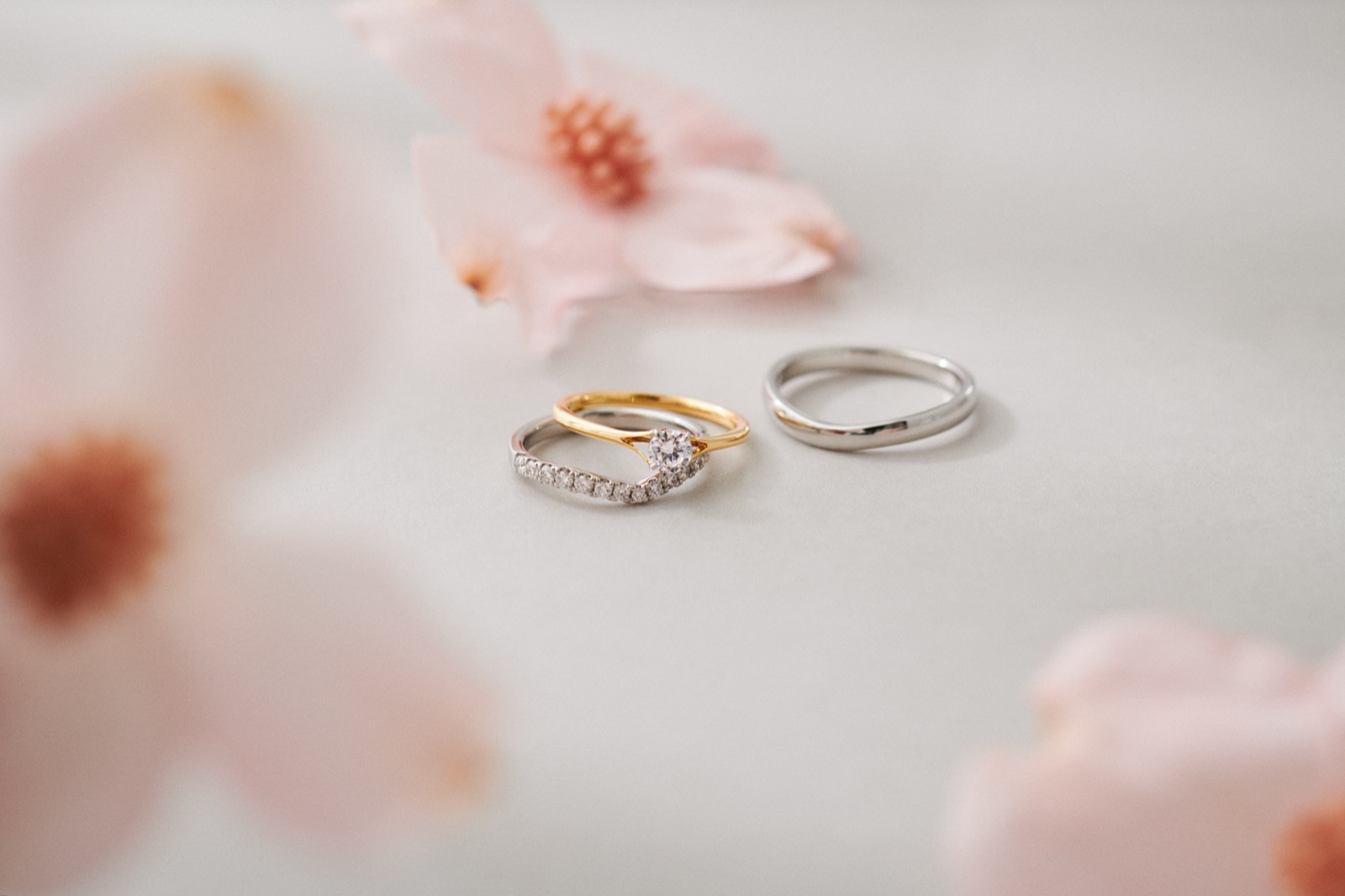
From figuring out your budget and finding the right fit to choosing diamonds, metals and a design you’ll still love years from now, here’s everything first-time ring shoppers need to know before saying yes to the rings.
Your engagement ring and wedding bands may be among the smallest things you’ll buy for your wedding, but they’re also among the few you’ll continue wearing long after the flowers have wilted, the photographs have been delivered and the last slice of wedding cake has disappeared. Which can make choosing them feel surprisingly daunting.
From metals and settings to diamond grades, sizing and customisation, there’s a lot to consider—and even more questions you might not realise you have until you start shopping. The good news? You don’t need to know everything before you begin.
We speak to experienced jewellers, ALUXE, KOBO Jewellery and ith to answer the questions first-time couples are most likely to have before, during and after shopping for their engagement rings and wedding bands.
1. Do We Need to Know Exactly What We Want Before We Start Shopping?
 Image by ith
Not at all. Having a rough idea of what you like can help, but you don’t need to walk into your first appointment with an exact design in mind.
“You do not need to know exactly what you want before visiting an atelier,” says Junpei from ith. “In fact, many couples begin with only a few impressions: ‘simple,’ ‘not too shiny,’ ‘something different,’ or ‘something we can wear every day.’”
Isabella from ALUXE similarly encourages couples to come with a general idea of the styles they like, but to keep an open mind. Beyond aesthetics, Jia Xi from KOBO Jewellery recommends couples to think about how the ring will fit into your life. “Consider how you’ll wear the ring for years to come,” she advises. “Think about your lifestyle, comfort, durability, budget, and how the design fits into your everyday life.”
Rather than putting pressure on yourselves to know exactly what you want, use your first appointments to discover what actually feels right once the rings are on your hands.
2. What Should We Discuss With Each Other Beforehand?
You don’t have to agree on a ring design before you start shopping, but it helps to discuss your approximate budget, preferred styles, timeline and how involved each person wants to be in the decision.
Jia Xi from KOBO Jewellery also recommends considering long-term wear, while ith suggests discussing how much you want your rings to match. Your lifestyles matter too—someone who works frequently with their hands or rarely wears jewellery may have very different needs from someone accustomed to wearing rings every day.
And if your preferences turn out to be completely different? That’s perfectly fine. Part of the fun is discovering whether there is a way to connect two individual styles without forcing either person to settle.
3. How Early Should We Start Shopping for Our Wedding Rings?
 Image by ith
Wedding bands are easy to leave until later, but giving yourselves a few months to explore your options can make the process much more enjoyable.
Junpei from ith recommends starting around four to six months before the wedding, while Isabella from ALUXE suggests allowing six to nine months, particularly if customisation, engraving or made-to-order designs are involved.
KOBO Jewellery’s advice is simply to start as early as you comfortably can. “This gives couples ample time to explore their options, gain a better understanding of what to expect, and make informed decisions,” Jia Xi explains.
Starting early doesn’t mean you have to commit early. It simply gives you space to browse, compare and occasionally change your mind without feeling as though the wedding date is chasing you.
4. What Happens at Our First Consultation?
Your first appointment should feel more like a discovery session than an exam you forgot to study for.
You’ll usually discuss your preferences, lifestyle, budget and timeline before trying on different designs. This is an important step, since details like width and weight can be difficult to judge from photographs.
“At our studio, we strive to provide an informative session where couples can try on our samples, explore different designs, and learn more about the workshop process and expected lead times,” shares Jia Xi from KOBO Jewellery.
Keep an open mind and try on different styles, including ones you might not initially consider. Sometimes knowing what doesn’t suit you is just as helpful as discovering what does.
5. How Much Should We Budget for Wedding Rings?
 Image by ALUXE
There’s no magical minimum that makes a pair of wedding bands “good” wedding rings. Prices vary depending on the material, width, gemstones, craftsmanship and level of customisation.
At ith, a pair of platinum or 18K gold wedding bands typically starts around S$3,000 to S$5,000 before GST, although simpler designs can cost less. Jia Xi at KOBO Jewellery similarly points to material, gemstone selection, ring width and design as key factors affecting price.
Rather than aiming for a prescribed figure, choose a budget that feels comfortable for both of you. When comparing jewellers, also check whether GST, engraving, customisation, resizing and future maintenance are included.
And forget the idea that a ring needs to cost a certain number of months’ salary. Your own financial priorities matter far more than any arbitrary benchmark.
6. Which Metal Is Best for Everyday Wear in Singapore?
Platinum and 18K gold are popular choices for everyday wear, with gold available in tones such as yellow, rose, white and champagne.
According to Junpei from ith, Singapore’s humidity does not normally damage either metal, although perspiration, product residue and changes in finger size can be more noticeable day to day.
Isabella from ALUXE recommends considering solid precious metals such as 18K gold for everyday wear, rather than focusing on colour alone. It’s also worth asking whether a ring is made from solid precious metal or relies on surface plating, as this can affect how it wears over time.
Ultimately, think about how you want your ring to look, feel and age. Platinum develops a soft patina over time, while different shades of gold offer everything from warm yellow and champagne to blush-toned rose and contemporary white.
7. What Should We Look for in a Wedding Ring Design?
 Image by KOBO Jewellery
Looks matter, of course, but think beyond how the ring looks the first time you put it on. Consider its width and comfort, how it pairs with your engagement ring, how it will age and whether it suits your everyday lifestyle.
“We often ask our couples to consider how the ring will pair with their everyday lifestyle and wardrobe, as well as how they envision wearing it long-term,” Jia Xi from KOBO Jewellery says.
Similarly, ith asks their couples one question: “How will this ring feel on an ordinary Tuesday, ten years from now?”. This encourages couples to think about how frequently they work with their hands, whether the ring will sit beside an engagement ring, and whether the design will still feel appropriate outside the wedding context.
After all, wedding rings are chosen for one of life’s biggest milestones, but they’ll spend most of their lives with you through ordinary days. The right ring should feel at home in both.
8. Do Our Wedding Bands Have to Match?
Not unless you want them to. There’s no rule saying either of you has to wear a ring that doesn’t feel like you simply because your partner loves it.
“Wedding rings can be different in material, colour or design, reflecting each person’s individual style and personality,” says Jia Xi from KOBO Jewellery. “Whether they are in harmony or contrast, what matters most is the meaning behind them and the story they share as a couple.”
If you’d still like a sense of connection, consider the same texture in different metals, a shared engraving or gemstone, or the same design in different proportions.
As Isabella from ALUXE puts it, “They don’t have to be identical to belong together.”
9. Which of the 4Cs Matters Most When Buying a Diamond?
 Image by ith
If you’ve started researching diamonds, you’ve probably encountered the 4Cs: Cut, Colour, Clarity and Carat. But which matters most?
Both ith and ALUXE recommend paying particular attention to cut when choosing a round brilliant diamond, as it has a major influence on its brilliance and sparkle.
Where you may have more room to compromise is clarity. “Many characteristics used to determine clarity grades are difficult or impossible to see without magnification,” explains Junpei from ith. Isabella from ALUXE similarly suggests looking for an eye-clean diamond rather than simply chasing the highest clarity grade.
Colour can also be balanced against your setting, with slightly warmer diamonds pairing beautifully with yellow, rose or champagne gold.
Rather than trying to maximise every C, aim for the combination that gives you the appearance you love most within your budget.
10. Natural or Lab-Grown Diamond: Which Should We Choose?
First things first: lab-grown diamonds aren’t “fake” diamonds. As Isabella from ALUXE explains, lab-grown and natural diamonds share the same basic physical and chemical properties; the key difference is how they are formed.
A natural diamond may appeal if you value its geological history and rarity, while a lab-grown diamond can offer greater flexibility in size and specifications for your budget.
“We would advise couples to treat either option primarily as a symbol they will wear, rather than as a financial investment,” says Junpei from ith.
There is no universally better option. Understand the difference, decide what matters most to you, and choose the one that feels right for your priorities.
11. What If We Prefer a Coloured Gemstone?
 Image by ALUXE
Diamonds aren’t the only option for engagement rings. Sapphires and rubies can bring colour and personality while still being practical for frequent wear, while smaller coloured gemstones can also be incorporated as meaningful accents.
“A good coloured gemstone should be assessed for an attractive hue, tone and saturation, a cut that brings out its colour and brightness, appropriate transparency and clarity, durability for the intended type of wear, secure setting and clear disclosure of any treatments,” advises Junpei from ith.
And if you love the brilliance of diamonds but still want colour, ALUXE notes increasing interest in fancy-colour diamonds such as pink and blue.
12. Are Couples Choosing More Personalised Rings Now?
Yes—but personal doesn’t necessarily mean elaborate. More couples are choosing meaningful details over designs simply because they’re popular. Personalisation can be as discreet as an engraving hidden inside the band, a birthstone only the wearer knows is there or two different rings connected by a shared finish.
“We’ve seen a fair number of couples drawn to personalised details such as hidden gemstones, engravings and mixed metals,” shares Jia Xi from KOBO Jewellery. “These small details often hold personal memories and stories that resonate with the couple, making the ring feel more meaningful and unique to them.”
Junpei from ith has observed a similar change. “The shift is therefore not necessarily from classic to unconventional,” it says. “It is from choosing a category to expressing an identity.”
Ultimately, personalisation can be as subtle as a hidden engraving, birthstone or shared finish—small details that make a ring feel unmistakably yours.
13. Should We Buy an Existing Design or Customise One?
 Image by KOBO Jewellery
Before deciding on a completely custom ring, consider what you actually want to make your own. As Junpei from ith points out, “Customisation is not automatically better simply because it involves more decisions.”
For some couples, personalising an existing design through the metal, width, finish, stones or engraving may be enough. Others may value the experience itself—KOBO Jewellery, for instance, offers workshops where couples can physically craft their rings together.
Ultimately, choose the route that gives you the design, meaning and experience that matter most to you.
14. How Long Do Custom Rings Take?
Timelines vary depending on how your rings are made. KOBO Jewellery’s Wedding Band Workshop takes around three hours, with same-day collection possible for rings without additional services, while gemstone setting or customised engraving can add six to eight weeks.
At ith, made-to-order rings typically take eight to 12 weeks, while more complex bespoke designs can take four to five months.
Always ask about production timelines before committing to a design—especially if your wedding date is approaching.
15. When Should We Get Our Ring Size Measured?
 Image by ith
Preferably when you’re ready to place your order, as finger size can fluctuate with temperature, hydration, physical activity and other temporary factors.
ith recommends avoiding measurements immediately after exercise, alcohol, a salty meal or exposure to extreme temperatures. Ring design matters too, as “wider rings often feel tighter”.
Where possible, have your size professionally confirmed while trying a ring close to your intended width, especially before placing your final order.
16. How Do I Secretly Find My Partner’s Ring Size?
If you’re planning a surprise proposal, finding the right ring size can be tricky. Both Jia Xi from KOBO Jewellery and Isabella from ALUXE suggests discreetly borrowing a ring your partner wears on the intended finger or enlisting a close friend or family member for help.
“A mutual friend of one of our couples pretended she wanted to browse engagement and wedding rings, and brought the future bride along. While helping the friend, we encouraged the bride-to-be to try on rings “just for fun”, allowing us to measure her size without giving away the proposal, Junpei from ith recalls.
Just remember that finger sizes can differ between hands. If you’re still unsure, consider a design that can be resized after the proposal.
17. Can Every Ring Be Resized?
 Image by ALUXE
No, and it’s worth asking before you buy. Plain bands are generally easier to adjust, while full-eternity rings, continuous engravings, mixed metals and certain gemstone settings can be difficult or impossible to resize.
ith recommends considering future resizing during the design stage, while Jia Xi from KOBO Jewellery cautions that repeated adjustments can affect a ring’s structure, finish or integrity over time.
If resizeability matters to you, discuss it during your consultation rather than assuming every ring can be adjusted later.
18. How Do We Keep Our Rings Beautiful for Years?
First, accept that beautiful doesn’t have to mean flawless. Wedding rings will naturally acquire scratches, patina and other signs of everyday wear. As Jia Xi from KOBO Jewellery explains, “Precious metals will naturally develop scratches and signs of wear over time, especially with everyday use.”
For everyday care, Isabella from ALUXE recommends mild soap, water and a soft brush, as well as removing your rings when they may be exposed to strong chemicals or impact. Gemstone settings should also be checked periodically to make sure everything remains secure.
Be conservative with polishing too, particularly for textured or engraved designs. As Junpei from ith puts it, “The objective of maintenance is not to keep a wedding ring permanently new, but to keep it structurally sound and beautiful as it ages.”
So, How Do We Know We’ve Found the Right Ring?
 Image by KOBO Jewellery
Ultimately, the right ring isn’t the one that ticks every box or meets everyone else’s idea of perfect. As Junpei from ith reminds couples, “Do not search for a ring that is perfect according to everyone else’s standards.”
Your wedding bands don’t have to match, your diamond doesn’t need the highest possible grades, and your ring doesn’t have to follow the latest trends.
It simply needs to feel comfortable, meaningful and true to you—so that years from now, with a few scratches and plenty of memories behind it, you’ll love it even more.
Credits: Feature image courtesy of ith.
All content from this article, including images, cannot be reproduced without credits or written permission from SingaporeBrides.
Follow us on Instagram, Telegram, and TikTok for the latest article and promotion updates!