


Singaporebrides | Weddings 101
April 2026
11 Wedding “Money-Saving” Tips That Aren’t Always Worth It
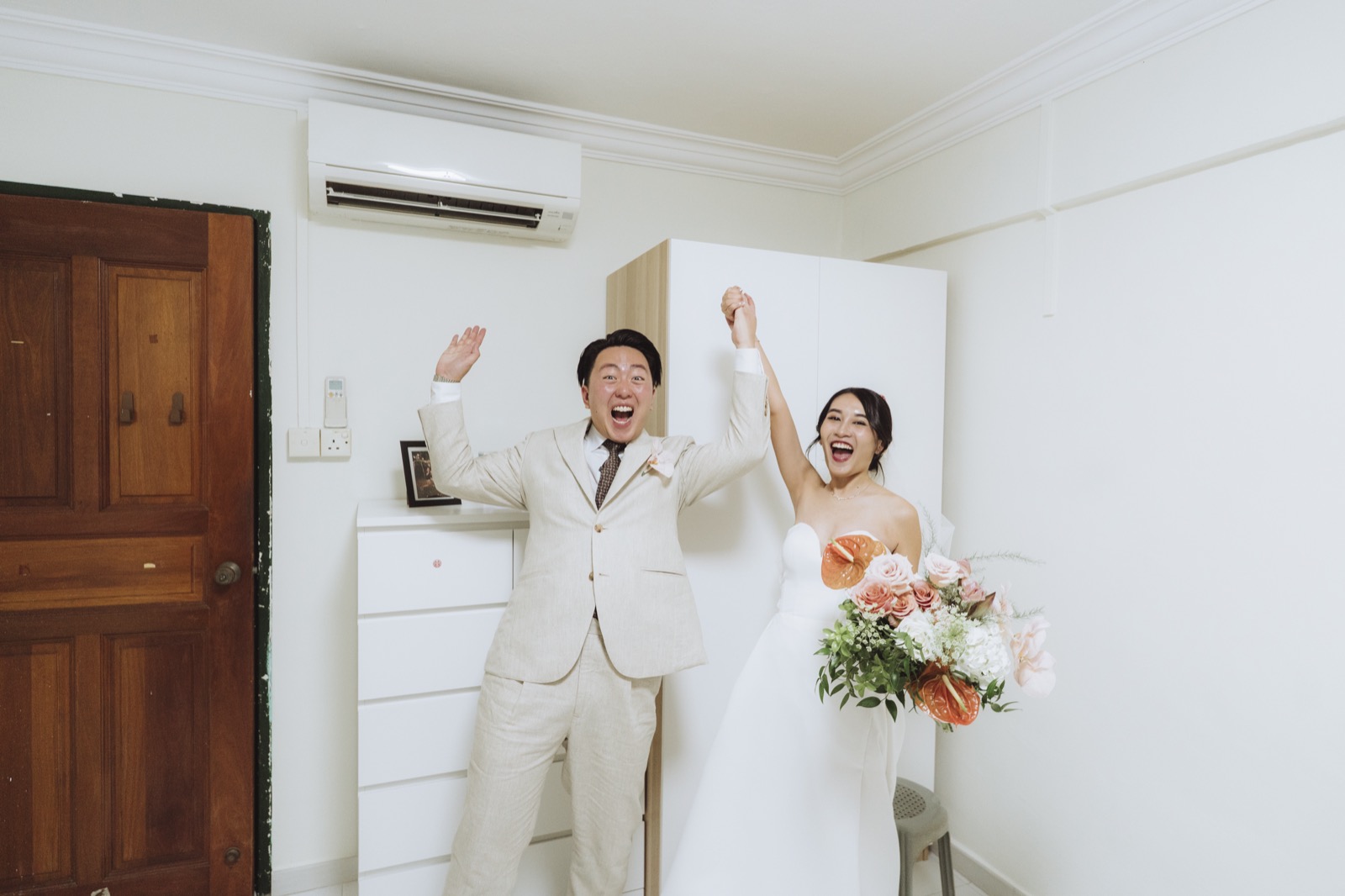
Not all wedding “money-saving tips” actually save you money.
When you’re planning a wedding, it’s only natural to look for ways to keep costs in check. You’ll likely hear the same advice repeated time and time again—DIY your décor, go digital with invitations, trim what feels unnecessary. These tips sound practical, even reassuring, offering the promise of a celebration that’s both beautiful and budget-conscious.
But as many couples soon discover, saving money isn’t always as straightforward as it seems. Some of these so-called savings come with hidden trade-offs, such as extra time, added stress, or costs that surface in less obvious ways. What begins as a careful attempt to spend less can quietly evolve into something else entirely. And in the end, not every “budget-friendly” choice actually leaves you with more in your pocket. In this article, we explore the well-meaning wedding budget tips that may not make the difference you expect.
1. DIY Everything
 Samantha and Jarred’s “Love You To The Moon And Back” Minimony at Open Farm Community by Justrealle Photography
DIY weddings are often romanticised as a budget bride’s best friend. Handmade invitations, self-assembled favours, and handcrafted décor seem like an easy way to cut costs, but in reality, the savings are rarely as straightforward. Materials, tools, and last-minute replacements can add up quickly, sometimes even exceeding what you would have paid a professional.
Then there’s the hidden cost of time. Between sourcing supplies, troubleshooting mistakes, and executing everything to a certain standard, DIY can become a major source of stress in the lead-up to your wedding. It works best for small, simple elements, but once you start trying to replicate professional results, the cost savings tend to disappear.
2. Opting for a Lunch Wedding
A lunch wedding is often pitched as the budget-friendly alternative to a dinner banquet, but in reality, the savings aren’t always that substantial. Many venues now price lunch and dinner packages quite closely, especially for popular dates, so the difference may be smaller than you think.
On top of that, you’ll still be spending on décor, photography, and entertainment, and sometimes even more to elevate the daytime atmosphere. It’s a lovely option if you genuinely prefer the vibe, but not necessarily a guaranteed way to cut costs.
3. Skipping a Wedding Planner
 Rebecca and Kin’s Stunning Colonial-Style Wedding at Ayana Resort Bali by Terralogical
When you’re trying to save money, a wedding planner can feel like an easy thing to cut. But without one, you may find yourself learning everything the hard way—missing small details, paying rush fees, or feeling overwhelmed by vendor decisions.
Planning a wedding involves hundreds of moving parts, and decision fatigue is real. Having someone experienced to guide you can actually help you avoid unnecessary spending, rather than add to it.
4. Choosing an Off-Peak Date
Weekday or off-season weddings sound like a great way to score discounts, but the savings aren’t always as big as expected. Some vendors no longer offer significantly lower rates, and the difference may not be enough to make a real impact on your overall budget.
At the same time, you might find yourself worrying about guest attendance—and even spending extra on transport or accommodation to make it easier for loved ones to come. In the end, the trade-offs can sometimes cancel out the savings.
5. Buying a Wedding Dress Online
 Shauna and Rainer’s Minimalist and Modern Zen Wedding at Raffles Hotel Singapore by Iki Company
Finding a gorgeous wedding dress online for a fraction of boutique prices can feel like a huge win—until the dress arrives. Fit issues are common, and alterations alone can add up quickly. Sometimes, the fabric or construction isn’t quite what you expected either.
In the worst-case scenario, you might end up buying a second dress altogether. What started as a budget-friendly choice can easily turn into spending more than you planned.
6. Renting or Borrowing Everything
Renting décor or borrowing items from friends sounds like a smart way to save, but it’s not always as simple as it seems. Rental costs can stack up once you factor in delivery, setup, and deposits, and you’ll still need to coordinate everything carefully.
Borrowing can be even trickier. You’ll need to keep track of items, make sure nothing gets damaged, and return everything on time. It’s helpful in some cases, but it doesn’t always translate into real savings.
7. Relying on Friends as Vendors
 Theingi and Yancong’s Sunset Destination Wedding at InterContinental Koh Samui Resort by Depth of Tales and Pikpongpol Photography
It can feel natural to ask a talented friend to photograph your wedding or help emcee—it saves money and feels more personal. But without the structure of a professional setup, things can get unpredictable.
If expectations aren’t clearly set, or something doesn’t go as planned, it can create awkwardness or strain the relationship. When it comes to such an important day, it’s worth thinking about whether the “savings” are worth the risk.
8. Skipping Videography
Videography is often one of the first things couples cut to save money, especially when photography already takes up a portion of the budget. But unlike flowers or décor, this is one of the few things you can’t recreate after the day is over.
Many couples only realise this afterwards, when the day passes by in a blur. In this case, saving money upfront might mean missing out on something you’ll wish you had later.
9. Doing Your Own Hair and Makeup
 Kim and Max’s Elegant White Wedding at Monti at 1-Pavilion by Forlover
Doing your own hair and makeup can feel like an easy way to save a few hundred dollars, especially if you’re already comfortable with your usual routine. But wedding-day conditions are a different story. Long hours, humidity, and photography lighting often mean you’ll end up investing in higher-performance, long-wear products anyway, and those “small” beauty purchases can quietly add up.
Skipping a trial run to save even more can also backfire. Without testing your full look in advance, you risk last-minute surprises that are hard to fix on the actual day, especially when time is tight and nerves are high. What looks fine in the mirror may not translate well on camera, which is why the real value of a professional isn’t just the makeup itself, but the reassurance that everything will hold up from first photo to last.
10. Choosing the Cheapest Vendor Option
When you’re comparing quotes, it’s tempting to go with the lowest one because it feels like the most straightforward way to stay on budget. But cheaper options can sometimes come with trade-offs, whether it’s less experience, fewer inclusions, or unexpected add-ons later on.
You might end up upgrading midway or paying extra to fix things, which can push your total spend higher than expected. Sometimes, what looks like a saving at the start doesn’t actually hold up by the end.
11. Buying Flowers and Doing Your Own Floral Arrangements
 Eint and Alvin’s Whimsical Secret Garden Solemnisation at Le Jardin by Jeffery Koh Photography
Buying flowers in bulk and doing your own arrangements is often pitched as a clear cost-saving move by skipping the florist, sourcing directly, and you’ll supposedly pay far less. On paper, it sounds logical enough. But in practice, the numbers don’t always work out that way.
Wholesale orders usually come with minimum quantities, which means you may end up buying (and spending) more flowers than you actually need, leading to wastage rather than savings. On top of that, you’ll still need to factor in everything a florist would normally handle, such as storage, conditioning, tools, vases, transport, and manpower to actually arrange everything. Once these hidden costs and logistics are added in, the total spend can start to look surprisingly close to, or even exceed, what a professional would have charged.
In the end, saving on your wedding isn’t just about cutting costs; it’s about understanding them. Not every tip needs to be followed, and not every “saving” is worth the trade-off it brings. When you look beyond the surface, the goal becomes less about spending as little as possible, and more about spending with intention. Because a well-planned wedding isn’t defined by how much you save, but by how thoughtfully you choose where it matters most.
Credits: Feature image by Annabelle and Bryan’s Joyous White Botanical Wedding at Goodwood Park Hotel by Iki Company.
All content from this article, including images, cannot be reproduced without credits or written permission from SingaporeBrides.
Follow us on Instagram, Telegram, and TikTok for the latest article and promotion updates!